
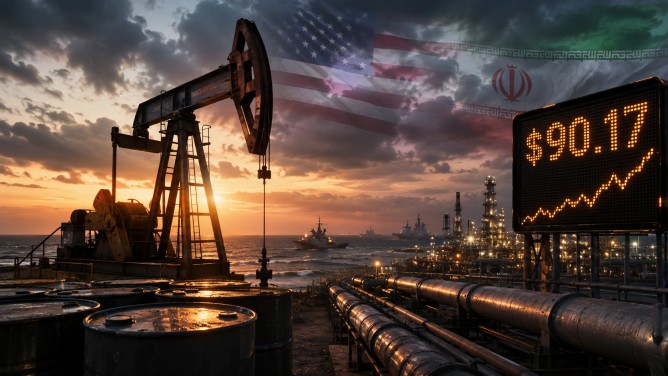
Oil prices have surged significantly as the two-month negotiation window between the United States and Iran concluded without reaching a peace deal. This development has sparked fears of a prolonged conflict, potentially causing further disruptions in global energy supplies. As a result, Brent crude prices soared past the $90 mark, climbing to approximately $91.63 per barrel, a level not seen since July 30. The spike in prices followed demands by US President Donald Trump for Iran to capitulate, accompanied by warnings that failure in diplomatic talks could lead to an escalation of the conflict.
Heightened concerns are also focused on the Strait of Hormuz, an essential artery for global oil shipping. There has been a notable decrease in the number of commercial vessels navigating this critical waterway, which has exacerbated fears about sustained interruptions in oil supply. The situation has been further inflamed by reports of an attack on a cargo vessel transiting the strait, raising alarms about the safety and security of maritime operations in the region.
Iran has signaled the possibility of adopting a more confrontational military approach if diplomatic negotiations do not succeed. The tension has led investors to brace for the potential of an extended period of disruption in oil supplies. Any lasting closure or reduction of traffic through the Strait of Hormuz is likely to exert additional upward pressure on crude oil prices, affecting the broader market.
Analysts warn that the ongoing unrest in the Middle East, compounded by the conflict in Ukraine, poses a significant threat to global energy markets. Such instability could lead to further spikes in oil and gas prices, creating economic ripples worldwide. The convergence of these geopolitical tensions underscores the fragile nature of the current energy landscape, where any escalation could have far-reaching consequences for supply and pricing.