
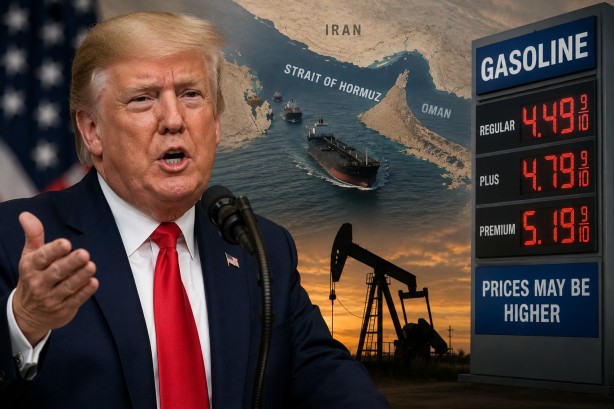
In the midst of ongoing tensions with Iran, US President Donald Trump has called on Americans to be prepared for a slight increase in gasoline prices. The disruption of shipping through the crucial Strait of Hormuz has added strain to the situation, with Trump emphasizing that the minor rise in fuel costs is a necessary sacrifice to prevent Iran from acquiring nuclear weapons. During a rally in New York, he floated the idea of declaring the Strait of Hormuz a US territory once Iran is subdued, a notion that has been met with firm opposition from Tehran.
Iran’s government has been quick to dismiss Trump’s remarks, with Deputy Foreign Minister Kazem Gharibabadi asserting that the Strait will remain under Iranian control. He indicated that the blockade would persist until the US acknowledges what he described as the reality of its defeat. Meanwhile, Iranian Foreign Minister Abbas Araghchi stated that Tehran has not yet made a decision regarding the resumption of negotiations with Washington, and he outlined that shipping through the Strait will not continue unless certain conditions set by Iran are fulfilled.
The ongoing standoff has significantly disrupted tanker traffic in the Strait of Hormuz, a pivotal passageway for global oil and natural gas exports. This uncertainty has contributed to an increase in crude oil prices, subsequently leading to heightened fuel costs. The average gasoline price in the United States has risen to approximately $4.08 per gallon, marking a 29% increase from the previous year, while Brent crude prices are also on track for a notable weekly rise.
Economic repercussions are being felt on both sides of the conflict. In Iran, President Masoud Pezeshkian has attributed rising inflation to the US blockade, along with sanctions and restrictions on Iranian oil exports. As the impasse continues, the Trump administration has warned of further financial sanctions against Tehran, as diplomatic efforts to reach a ceasefire remain at an impasse.