
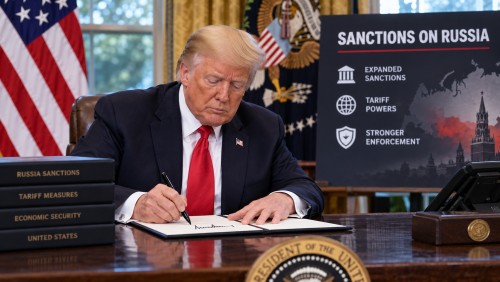
In a bid to tighten economic pressure on Russia, the United States has taken significant legislative steps amid ongoing geopolitical tensions. The latest development involves U.S. President Donald Trump signing a new law that expands sanctions on Russia and extends existing sanctions on Iran. This move is part of a broader strategy to curb Russia’s revenue from energy exports, which play a crucial role in funding its activities.
The legislation empowers the president with the authority to implement tariffs of up to 100% on nations that continue to purchase Russian energy. This broadens the scope of the U.S.’s capacity to target countries aiding Russia or helping Moscow to circumvent sanctions. The law’s passage through the House of Representatives with bipartisan support underscores the unified stance on addressing these international concerns.
Key measures within the legislation focus on Russian officials and financial networks, especially those linked to Russia’s military efforts. By restricting Russia’s ability to profit from its oil and gas sectors, the U.S. aims to weaken the economic foundations supporting its adversarial activities. The White House has emphasized that this law will strengthen the overall sanctions framework against Russia.
The implications of this law could be far-reaching, especially for major importers of Russian energy like India and China. The administration now holds considerable discretion over which countries will face these new tariffs and whether any sanctions might be waived. This flexibility in enforcement highlights the strategic leverage the U.S. aims to maintain in its foreign policy.
Signed by Trump on September 18, the legislation not only targets Russian economic channels but also reinforces the sanctions regime on Iran. This dual focus reflects the U.S.’s ongoing efforts to address multiple geopolitical challenges simultaneously, as it seeks to uphold and expand its economic and diplomatic influence globally.