
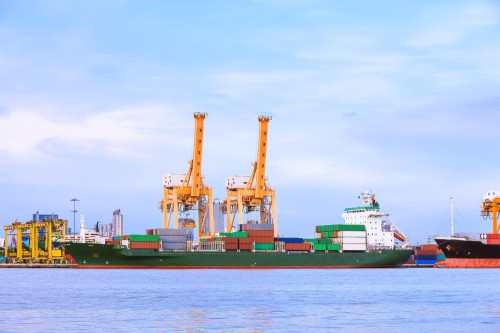
Europe is currently confronting a new wave of economic shock from China, which poses a threat to local manufacturing sectors and could lead to job losses, according to trade experts. Concerns are mounting over the devaluation of the euro and the influx of Chinese “zombie firms,” reminiscent of the “China shock” experienced by the United States 25 years ago. This term was coined to describe the disruptive effects following China’s entry into the World Trade Organization, which resulted in a surge of imports that displaced local industries and reportedly led to the loss of approximately 2.5 million jobs.
Jens Eskelund, president of the European Chamber of Commerce in Beijing, highlights that the issue lies not just in finished goods imports, such as electric vehicles, but in the extensive volume of components arriving from China. This increasing dependency is forcing the European Union to consider significant changes. Reports suggest that the EU might mandate companies to source critical components from at least three different suppliers to mitigate this dependency. Discussions on potential measures are scheduled for a European Commission meeting on May 29, with industry leaders like Oliver Richtberg of VDMA commending the EU for its proactive stance, though expressing disappointment with Berlin’s engagement levels.
The competitive pricing of Chinese products, partly due to state subsidies not feasible in Europe, and a significant exchange rate discrepancy, are contributing factors to the current situation. Economist Jürgen Matthes notes that the Chinese yuan may be undervalued by as much as 40% against the euro, influencing procurement decisions. Richtberg points out the rationality behind opting for Chinese suppliers offering similar quality at a reduced cost, yet warns of the adverse impact on Europe’s market share and job losses, citing Germany’s machinery industry as an example, having shed 22,000 jobs in the past year alone.
Data from sources like Soapbox, a China trade monitoring website, underscores the potential cannibalization of European industries. For instance, China’s dominance in supplying amino acids and polyhydric alcohols to the EU is profound, with the latter accounting for 96% of imports by volume. The overarching risk is that the availability of low-cost imports could render EU production unsustainable, thereby increasing reliance on China. Trade figures reflect a growing surplus in China’s favor, with Germany’s trade deficit with China doubling from $12 billion to $25 billion between 2024 and 2025.
In response, the EU has proposed legislative measures, including the Industrial Accelerator Act and updates to the Cyber Security Act, aiming to secure its industries. However, these are not expected to take effect until 2027 or later, leaving immediate action necessary. Andrew Small of the European Council on Foreign Relations emphasizes the challenges of addressing the imbalance, noting that tariffs have been insufficient and politically taxing to implement. Meanwhile, China remains influential, capable of disrupting EU countermeasures while maintaining its export flow.