
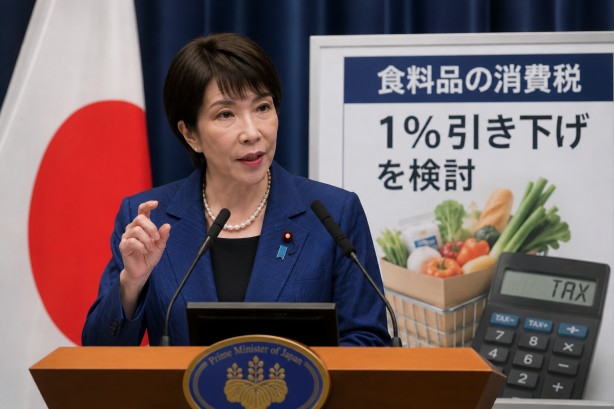
In a strategic move to alleviate financial strain on households, Japanese Prime Minister Sanae Takaichi is set to direct the ruling Liberal Democratic Party to advance a proposal that aims to temporarily slash the consumption tax on food items. The plan, which would reduce the tax from 8% to 1%, is anticipated to be in effect for two years beginning in April 2027.
This initiative emerges as a resolution to the impasse in cross-party negotiations concerning tax reform. The government, along with the ruling coalition, has shown strong support for this temporary tax reduction coupled with financial aid targeted at low- and middle-income families. A significant component of the proposal is the allocation of approximately ¥600 billion in financial assistance, designed to further mitigate the impact of rising living costs.
The government is working towards finalizing this policy by early August. This timeline is crucial for introducing the necessary legislation during an extraordinary parliamentary session slated for later this year. Such legislative measures are imperative to ensure that the tax cut can be implemented by the set date of April next year.
The proposed tax cut is part of a broader strategy to address economic challenges faced by households, particularly in light of recent economic pressures. By targeting the consumption tax on essential food items, the government aims to deliver immediate relief to consumers, thereby reinforcing economic stability and consumer confidence.
As this policy takes shape, it marks a significant step in Japan’s fiscal strategy, balancing short-term relief with long-term economic planning. The focus remains on easing the cost-of-living burden while fostering an environment conducive to sustainable economic growth.